Most car owners don’t think about resale value until they’re ready to sell, and by then, it’s often too late to recover thousands of dollars in lost equity. A vehicle is one of the most significant financial assets most people own, yet it’s treated as a consumable rather than an investment. The difference between a car that fetches top dollar and one that sits on the lot at a discount comes down to decisions made over months and years, not weeks. This guide is a practical roadmap for owners who want to be intentional about preserving their vehicle’s worth from the day they drive it off the lot to the day they hand over the keys.
The Financial Reality of Vehicle Ownership
Before diving into tactics, it’s worth understanding the landscape. New vehicles lose roughly 20% of their value in the first year alone, and up to 60% over five years, according to industry estimates. That depreciation curve is steep, but it isn’t entirely out of your control. While you can’t stop the clock, you can absolutely slow the drop.
The used car market has shifted meaningfully in recent years. Buyers are more informed, inspections are more thorough, and digital vehicle history reports are standard. A car with documented care, clean cosmetics, and a verifiable service record commands a measurable premium over a comparable vehicle without that paper trail. The strategies in this guide aren’t about cosmetic tricks or staging; they’re about building genuine, defensible value that holds up under scrutiny.
First Impressions: Exterior Care and Paint Protection
Buyers make emotional decisions first and logical ones second. A car that looks clean and cared-for signals a well-maintained engine, a responsible owner, and fewer surprises post-purchase. Surface condition is the first filter any buyer applies, and a poor showing here will undercut even the most thorough mechanical history.
Going beyond a standard car wash is non-negotiable if you want to present well. Auto detailing is not a luxury service reserved for car enthusiasts; it’s a practical maintenance investment. A professional detail includes:
- Paint decontamination using clay bar treatments to remove bonded industrial fallout and road grime that washing alone can’t address
- Paint correction to eliminate swirl marks, light scratches, and oxidation that dull the finish
- Interior steam cleaning to neutralize odors and lift stains from fabric and leather that home cleaning products can’t fully resolve
- Engine bay cleaning to present a tidy, well-kept mechanical compartment during buyer inspections
A full professional detail costs anywhere from $150 to $500, depending on vehicle size and condition. That investment routinely returns multiples of its cost at the point of sale.
For owners thinking years ahead, paint protection is where the real equity preservation happens. Wrap shops offer professional-grade paint protection film (PPF) installations that shield the vehicle’s factory finish from road debris, UV exposure, and chemical contaminants. A quality PPF or ceramic coating can keep paint looking factory-fresh for years, which is a meaningful visual asset when you’re negotiating.
Ceramic coatings, applied by a professional detailer or wrap shop, chemically bond to the paint surface and provide hydrophobic protection that lasts two to five years. These aren’t weekend DIY projects; proper surface preparation and application technique are critical to the coating’s performance and longevity. Investing in a professional installation ensures the protection actually works and gives you a service receipt to include in your documentation.
Cosmetic Repairs: Fix Small Problems Before They Become Negotiating Leverage
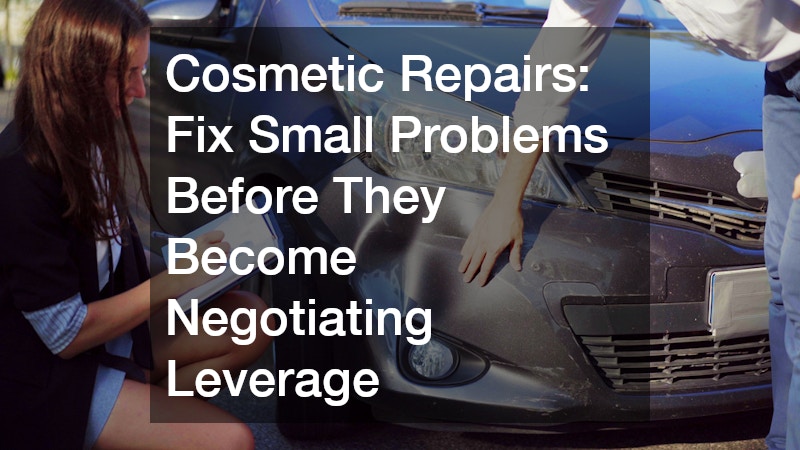
Minor cosmetic damage is the most common source of negotiation leverage for buyers. Scuffed wheels, cloudy headlights, and door dings are the kinds of issues buyers catalog mentally as they walk around the car. Each one becomes a line item in their counteroffer. The smart strategy is to address these before listing, not after.
Bumper repair services handle one of the most common cosmetic issues on the road: scuffs, cracks, and minor impact damage to bumper covers. A professional repair typically costs far less than a full replacement and can restore a component to near-original condition. Similarly, headlight restoration is an inexpensive service that dramatically improves vehicle appearance and is a safety concern that savvy buyers will flag during inspection.
A pre-sale cosmetic checklist should include:
- Wheel scuff repair or refinishing for curb rash
- Headlight lens restoration or replacement
- Rubber seal and trim restoration to prevent the faded, dried-out look
- Door edge and handle scratch repair
- Carpet and upholstery repair for worn or stained areas
Auto body repair doesn’t always mean a full panel replacement. Paintless dent removal (PDR) is a technique where trained technicians use specialized tools to massage dents out from behind the panel without disturbing the paint surface. For hail damage, parking lot dings, and minor door dents, PDR is cost-effective and preserves the original factory finish, which matters to buyers and appraisers alike.
For paint chips and scratches that have penetrated through the clear coat, professional touch-up work can prevent rust from forming and keep the damage from spreading. A rust spot discovered during a buyer inspection is a significant red flag that raises questions about what else might have been neglected. Addressing chips early costs very little and prevents a much larger problem down the road.
Structural and Safety Integrity: The Issues Buyers Fear Most
Nothing kills a deal faster than the word “structural damage.” Buyers who suspect a vehicle has been in a serious collision without proper repair will either walk away or demand a steep discount. Professional collision repair from a certified shop, followed by a clean inspection report, is the difference between transparency and liability.
After any significant impact, even a moderate fender bender, professional alignment and frame inspection should be completed promptly. Modern vehicles have complex geometry that affects handling, tire wear, and safety system calibration. Deferred repairs compound into more expensive problems and show up clearly on pre-purchase inspections. If repairs were made, document them. A clean bill of structural health from a reputable shop is a selling point, not something to hide.
Modern vehicles are loaded with electronic systems, and buyers expect all of them to work. One often-overlooked area is key fobs and vehicle security systems. A missing second key or a non-functional fob will cost you more in price negotiation than it would have cost to replace. Engaging a locksmith service to replace lost keys or repair malfunctioning fobs before listing the vehicle is a straightforward fix that signals attention to detail.
All electronic features, from backup cameras to lane departure warnings to remote start, should be tested and functional. Buyers who find non-working features during a test drive lose confidence rapidly, and that skepticism extends beyond the specific issue to the overall care of the vehicle.
Mechanical Maintenance: What Lives Under the Hood

A clean bill of mechanical health is the backbone of any strong resale position. Routine oil changes, filter replacements, and fluid flushes are table stakes. But the vehicles that command the strongest premiums in the used market are those with documented maintenance histories that go beyond the basics.
For truck and commercial vehicle owners, diesel engine repairs and specialized service intervals are particularly important to document. Diesel buyers are often knowledgeable and skeptical, and they will scrutinize the service history closely. Records showing injection system service, DPF maintenance, and turbocharger inspections done on schedule tell a serious buyer that the previous owner understood what they owned and took care of it properly.
Key mechanical documentation to maintain includes:
- Timestamped oil change and fluid service records
- Timing belt or chain replacement with mileage notation
- Brake pad, rotor, and caliper service history
- Tire rotation and alignment records
- Any manufacturer-recommended interval services completed on time
How you handle breakdowns and roadside issues says something about your maintenance philosophy. Owners who address problems immediately, rather than limping a vehicle along, prevent compounding damage that is expensive to repair and shows up in diagnostic scans. Using a local towing company rather than driving a compromised vehicle is the right call, both mechanically and financially. Running an engine low on oil, overheating, or driving on a damaged tire creates internal damage that no service record can fully reverse.
When a warning light comes on, the response time matters. A vehicle that has been driven with a persistent check engine light will show diagnostic trouble code history that buyers and technicians can pull. Address issues promptly, document the repair, and clear codes only after the underlying problem is resolved.
Aftermarket Modifications: Expanding Value Without Limiting Your Market
Modifications are a complicated subject in the resale world. What appeals to one segment of buyers actively repels another, and the wrong modification on the wrong vehicle can meaningfully reduce the buyer pool. The guiding principle should be: add functional capability without eliminating mass-market appeal.
Suspension work, particularly a lift kit on a truck or SUV, is one of the most popular modifications in the market. Done professionally with quality components, a lift kit can appeal to off-road buyers and utility-focused truck owners who represent a real and active segment of the used vehicle market. Done cheaply or improperly, it raises red flags about overall maintenance quality and can create liability around safety inspections. If you’ve modified your suspension, have documentation from the shop that performed the work, and use components from reputable manufacturers.
Not all modifications are polarizing. Practical, reversible accessories tend to expand rather than limit your buyer pool. A professionally installed hitch, for example, adds genuine utility for buyers who tow trailers, haul bikes, or carry cargo carriers. It’s a feature, not a modification, when it’s installed correctly and doesn’t alter the vehicle’s appearance or performance in ways that concern buyers.
Other value-adding accessories include:
- Bed liners (spray-in preferred over drop-in for truck buyers)
- Running boards and step bars on tall SUVs and trucks
- Roof racks installed at factory mounting points
- Remote start systems installed by a certified shop
The common thread across these additions is professionalism of installation and reversibility if needed. Keep receipts for every accessory, and be prepared to include or remove them based on buyer interest.
Documentation and Presentation: Where Value Is Won or Lost

The difference between a vehicle that appraises at the top of its range and one that doesn’t often comes down to documentation. Buyers and appraisers reward certainty, and a comprehensive service history eliminates uncertainty. Start building a physical or digital “Value Folder” from the day you buy the vehicle.
This folder should contain:
- Every service receipt is organized chronologically
- Warranty documentation and recall completion records
- Title and registration history
- Any post-purchase inspection reports
- Receipts for accessories, modifications, and cosmetic repairs
- Photos documenting the vehicle’s condition at key milestones
A vehicle with 80,000 miles and a complete service folder is a more compelling buy than one with 60,000 miles and no documentation. Buyers are paying for confidence as much as they’re paying for mileage.
When it’s time to list, presentation matters as much as condition. Poor photography is one of the most common reasons well-maintained vehicles underperform in the private sale market. Use these principles:
- Photograph in indirect natural light, early morning, or overcast, to avoid harsh shadows and reflections
- Clean the vehicle the day of the shoot, not the week before
- Shoot from consistent angles: front 3/4, rear 3/4, driver profile, passenger profile, full interior, dashboard, engine bay, and any notable features.
- Use a neutral, uncluttered background.
- Photograph any imperfections honestly; buyers who discover surprises in person lose trust instantly.
Write a listing description that leads with the vehicle’s strengths, provides transparent disclosure of any known issues, and includes the documented service history as a headline feature. Trust is a value driver, and a listing that reads as honest and thorough attracts more serious buyers.
The Long-Term Mindset That Pays Off at Sale
Maximizing your car’s resale value isn’t something you do in the week before you list it. It’s a daily, monthly, and annual practice of treating your vehicle as the asset it is. Every service completed on schedule, every cosmetic issue addressed promptly, and every receipt saved is a deposit into the equity account of your vehicle. The owners who walk away from a sale with the most money are the ones who made smart decisions while they were driving the car, not the ones who scrambled to prepare it for sale.
The used car market rewards transparency, documentation, and condition. If you’ve taken care of your vehicle the right way throughout your ownership, the sale process becomes straightforward because the evidence speaks for itself.
About the Author